05 Nov 2026
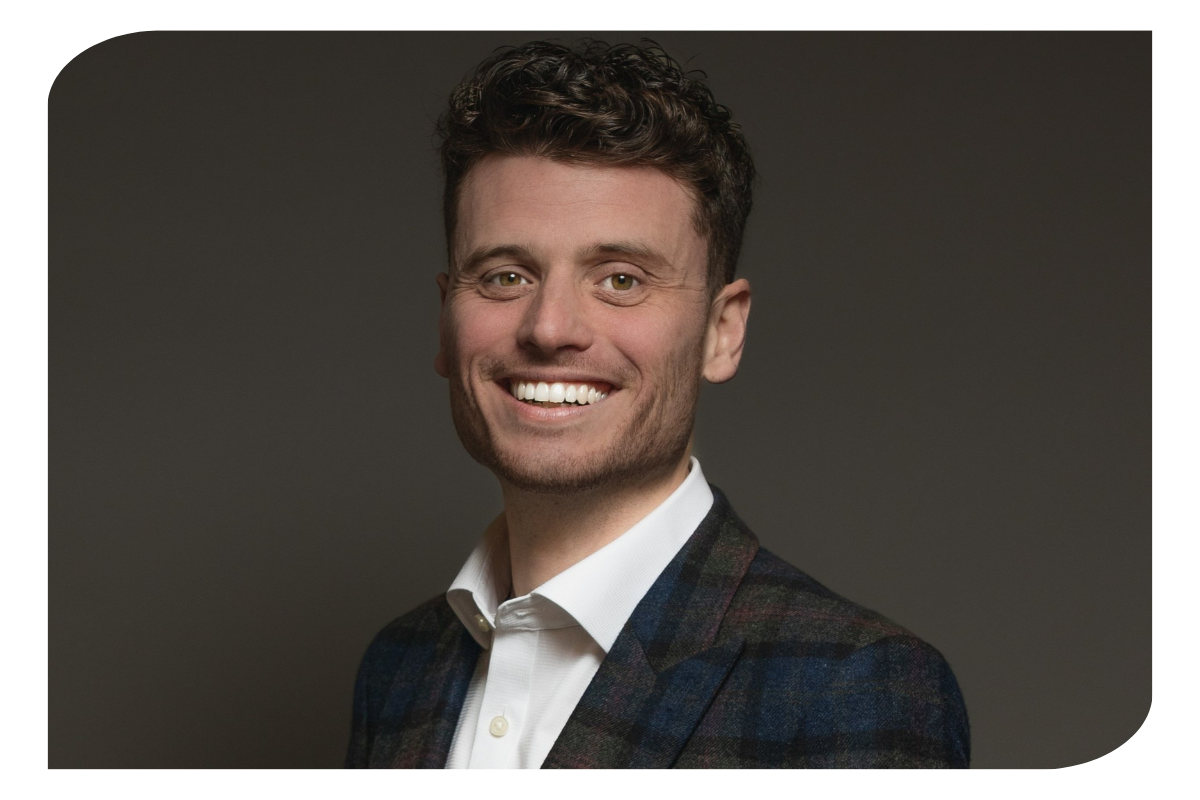
By Matt Wardrop, Head of Business Development, KWC Global
British author, Oliver Burkeman writes in his Four Thousand Weeks: Time Management for Mortals that one of the great challenges of modern life is not simply saying no to the things we don’t want to do. It’s saying no to many of the things we do.
That resonated with me. Like many people, I still make time to keep myself fit, watch the odd Dundee United game and catch up with friends. But as work, family and other commitments have grown, those choices have become increasingly deliberate. Every “yes” requires a “no” somewhere else.
Increasingly, I wonder whether the same principle applies to how we interact with the world around us: every hour spent scrolling, swiping and consuming content is an hour not spent doing something else. Not necessarily something more productive. Simply something more human.
For years, the debate around social media has focused on mental health, wellbeing and online safety. They are important conversations. But for employers, professional services firms and business leaders, there may be another question worth asking: What happens when the generation growing up behind screens becomes the generation responsible for building client relationships, influencing decisions and winning business?
Because today’s teenagers will eventually become tomorrow’s accountants, lawyers, consultants, advisers and leaders. And despite everything technology has changed, the foundations of commercial success remain remarkably consistent.
Clients still buy from people they trust, leaders still need to bring others with them, advisers still need to influence decisions, and businesses still need rainmakers.
The challenge is that many of the capabilities required to do those things were traditionally learned almost by accident. Previous generations accumulated thousands of hours of face-to-face practice through sport, part-time jobs, university life, social clubs and everyday interactions.
They learned how to build rapport, navigate disagreement, recover from awkward conversations and read a room. Nobody called it Emotional Intelligence, but that’s exactly what it was.
Today, communication hasn’t disappeared. In many ways, younger generations communicate more than ever before. The difference is that increasing amounts of that communication take place through screens.
Messages can be edited, responses can be delayed, difficult conversations can be avoided, and relationships can be maintained without ever sharing physical space.
That doesn’t make younger generations less capable. Far from it. They possess levels of digital fluency, adaptability and technological confidence that previous generations never needed.
But it does raise an interesting question: if trust, influence and relationship-building have traditionally been developed through repeated face-to-face interaction, where will tomorrow’s professionals acquire those experiences?
This question becomes even more important when viewed alongside another transformational force: Artificial Intelligence, since when something becomes more accessible, its value changes. As a result, increasingly, competitive advantage will not come from simply possessing information. It will come from applying that information through human interaction.
So, while AI can help prepare for a client meeting, it cannot build a trusted relationship over five years, it cannot analyse stakeholder priorities, or sense hesitation across a boardroom table.
AI can structure a persuasive argument, but it cannot build conviction, trust or confidence in the room. Those aren’t soft skills, but are Emotional Intelligence skills, and as AI becomes more capable, they may become even more valuable.
At KWC Global, we work with accountants, lawyers, consultants and advisers whose technical expertise is rarely in doubt. The challenge is rarely intelligence. More often, it is translating intelligence into impact: the ability to listen, to adapt, to persuade, to challenge constructively, and just as important, to understand not only what someone is saying, but what they are not saying.
These capabilities have always mattered, and my suspicion is they are about to matter a lot more.
Since the beginning of 2025, I stopped using Facebook and Instagram. I wasn’t conducting an experiment and I certainly wouldn’t claim that one person’s experience proves anything meaningful. What surprised me wasn’t spending less time online.
It was spending more time engaging with the people around me. Without really intending to, I found myself more present in conversations, more likely to strike up discussions and more aware of the world immediately in front of me rather than the one inside a screen.
That observation proves very little. But it did leave me reflecting on a wider question: if social interaction is, at least partly, a skill developed through practice, what happens when increasing amounts of that practice move online?
Technology is both enabling and disabling: SATNAV helps us reach our destination but often leaves us unable to navigate without it, calculators improve efficiency but can weaken mental arithmetic. And if AI eventually writes the pitch, researches the buyer and prepares the proposal, at what point do we notice that nobody involved has actually learned how to sell?
The next generation of rainmakers is already entering our organisations. The question isn’t whether they have the potential, rather it is It’s whether we’re giving them enough opportunities to practise being human.
Because in a world where knowledge is increasingly abundant and technology increasingly powerful, the ability to connect with another human being may become the most valuable professional skill of all.